
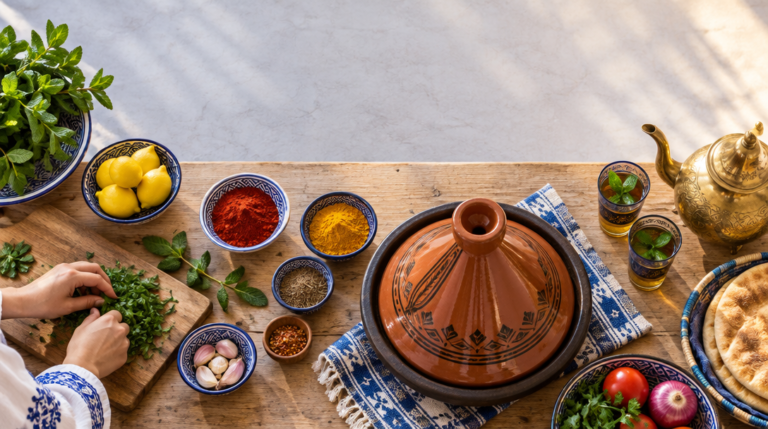
Morocco food experiences for women: A Complete Food Journey for Women Travelers
In Morocco, food is never just a meal. It is a language of hospitality, a reflection of family traditions and one of the most beautiful ways to discover the country’s culture. Morocco food experiences for women from the aromatic spices filling traditional markets to slow-cooked tagines prepared in clay pots, every dish tells a story about the people, landscapes and traditions that make Morocco such a fascinating destination.
For women travelers, exploring Morocco through its cuisine offers much more than tasting unfamiliar dishes. It creates opportunities to meet local women, discover family recipes, learn traditional cooking techniques and experience everyday life beyond the usual tourist attractions. Whether you are wandering through the colorful markets of Marrakech, preparing couscous with a local cook in a traditional home or enjoying mint tea in a quiet mountain village, food becomes a bridge between cultures.
A culinary journey also provides a relaxed and meaningful way to connect with other travelers. In small groups and women-only experiences, cooking becomes a shared adventure where everyone can participate, exchange stories and discover something new.
If you are planning a trip to Morocco and want to experience the country beyond its famous monuments and desert landscapes, this guide will help you discover the best culinary experiences, traditional dishes and local encounters to include in your journey.
1. Discover Morocco Through Its Traditional Food Markets
One of the best ways to understand Moroccan cuisine is to begin where the ingredients come from: the local markets.
Markets are at the heart of everyday Moroccan life. Early in the morning, vendors arrange fresh vegetables, seasonal fruits, olives, aromatic herbs, dried fruits and mountains of colorful spices. The atmosphere is lively, with shoppers negotiating prices, vendors calling out their offers and the smell of freshly baked bread drifting through the streets.
For women travelers, visiting a traditional market with a knowledgeable local guide can turn a simple shopping excursion into an unforgettable cultural experience.
You will discover ingredients that form the foundation of Moroccan cooking, including:
- Cumin: An essential spice used in tagines, grilled meats and vegetable dishes.
- Saffron: One of Morocco’s most valued spices, particularly associated with dishes from the south.
- Ginger: Frequently used in traditional meat and chicken preparations.
- Cinnamon: Adds warmth to both sweet and savory recipes.
- Paprika: Provides color and a gentle flavor to many traditional dishes.
- Preserved lemons: A distinctive ingredient that gives Moroccan tagines their characteristic citrus flavor.
- Fresh coriander and parsley: Everyday herbs that bring freshness to sauces, salads and cooked dishes.
Marrakech is an excellent destination for this experience. Its traditional markets offer an incredible variety of ingredients, and a guided visit can introduce you to the differences between spice blends, regional products and seasonal specialties.
Rather than simply purchasing souvenirs, take the opportunity to ask questions, smell the spices and learn how local cooks select their ingredients.
You might even shop for the ingredients you will use later in a hands-on cooking workshop.
2. Join a Traditional Moroccan Cooking Class
If there is one experience that should be on every food-loving woman’s Morocco itinerary, it is a traditional cooking class.
Moroccan cuisine is famous for its rich flavors, careful preparation and combination of sweet, savory and aromatic ingredients. However, many of its most interesting secrets are best discovered in a local kitchen rather than through a restaurant menu.
Cooking workshops offer travelers the opportunity to participate in the preparation of traditional dishes under the guidance of experienced local cooks.
Most classes begin with an introduction to the ingredients and spices. You may then prepare vegetables, marinate chicken or meat, measure spices and learn how to combine ingredients to create balanced flavors.
Some of the most popular dishes to learn include:
Chicken tagine with preserved lemons and olives
This is one of Morocco’s most recognizable dishes. Chicken is slowly cooked with onions, garlic, ginger, saffron, preserved lemons and olives until the flavors combine into a rich, aromatic sauce.
Vegetable tagine
A wonderful option for vegetarian travelers, vegetable tagine combines seasonal vegetables with spices, herbs and olive oil. It is often served with fresh bread.
Traditional couscous
Couscous is one of the most important dishes in Moroccan culinary culture. Traditionally prepared with steamed semolina, vegetables and sometimes meat, it is particularly associated with Friday family meals and special gatherings.
Moroccan salads
Moroccan cuisine includes an impressive variety of cooked and fresh salads. Zaalouk, prepared with eggplant and tomatoes, and taktouka, made with peppers and tomatoes, are popular examples.
Traditional Moroccan bread
Bread is an essential part of daily life in Morocco. You may learn how to knead, shape and bake traditional round loaves, discovering techniques passed down through generations.
The best part of a cooking class is that you do not simply watch someone prepare a meal. You become part of the process, learning techniques that you can recreate when you return home.
At the end, everyone gathers around the table to enjoy the dishes they have prepared together.
3. Meet Local Women and Discover Their Culinary Traditions
One of the most meaningful aspects of culinary travel in Morocco is the opportunity to meet local women and learn about their role in preserving traditional food culture.
Across the country, recipes are passed from mothers to daughters, and many cooking techniques remain deeply connected to family life. Women play an important role in maintaining these traditions, from preparing daily meals to organizing food for weddings, religious celebrations and family gatherings.
A visit to a local kitchen or a community cooking workshop can provide a more personal understanding of Moroccan culture.
You might learn how families prepare couscous by hand, how bread is traditionally baked in communal ovens or how different regions use their own combinations of spices and ingredients.
These encounters also create opportunities for genuine cultural exchange.
You can ask about everyday life, family traditions, seasonal ingredients and the stories behind particular recipes. In return, you might share something about your own country’s food culture and cooking habits.
For women traveling alone or in small groups, these experiences can be particularly rewarding. They offer an opportunity to connect with other women through something universal: food, family and hospitality.
When choosing a culinary experience, look for workshops that work directly with local cooks and communities, ensuring that your visit contributes positively to the people sharing their knowledge.
4. Experience a Traditional Moroccan Family Meal
Restaurants are wonderful places to discover Moroccan cuisine, but sharing a meal in a local home offers an entirely different experience.
Hospitality is an important part of Moroccan culture. Guests are traditionally welcomed with warmth, and meals are often occasions for bringing family and friends together.
A home dining experience usually begins with mint tea, accompanied by traditional pastries, olives, nuts or other small snacks. Depending on the household and occasion, the main meal may include a tagine, couscous, seasonal vegetables or homemade bread.
Unlike formal restaurant dining, a family meal is usually relaxed and social. People take their time, share dishes and enjoy conversations around the table.
For women travelers, this is an excellent opportunity to discover the human side of Morocco.
You may find yourself discussing recipes with the family, learning about traditional celebrations or discovering how Moroccan families organize their daily meals.
There are also a few cultural details worth knowing before visiting a local home:
- Dress comfortably and respectfully, particularly in traditional neighborhoods and rural communities.
- Remove your shoes if your hosts request it.
- Wait for your hosts to invite you to begin eating.
- Bread is often used to help pick up food when eating from a shared dish.
- Accept hospitality graciously, while politely communicating any dietary restrictions.
- Ask permission before photographing people or their homes.
Your local guide can explain the customs and help facilitate communication, allowing you to enjoy the experience naturally.
It is often these simple moments around a family table that become some of the most memorable parts of a trip.
5. Discover Moroccan Mint Tea and Café Culture
No culinary journey through Morocco would be complete without discovering its famous mint tea.
Often called Moroccan tea, this refreshing drink is traditionally prepared using green tea, fresh mint leaves and sugar. It is served in small decorative glasses and poured from a height to create a light layer of foam.
But mint tea is much more than a beverage. It represents hospitality, friendship and the pleasure of taking time to enjoy someone’s company.
You will encounter it everywhere, from traditional family homes and mountain villages to elegant riads and rooftop cafés.
For women travelers, exploring Moroccan café culture is another enjoyable way to experience everyday life.
In Marrakech, you can stop at a rooftop café overlooking the old medina, enjoy a glass of tea after exploring the markets or spend a quiet afternoon watching the movement of the city.
In smaller towns and mountain villages, cafés provide a glimpse into a slower pace of life.
Pair your tea with traditional Moroccan pastries such as:
- Chebakia: A sesame-based pastry shaped into intricate patterns, fried and coated with honey.
- Ghriba: Traditional crumbly cookies prepared with almonds, coconut or semolina.
- Kaab el Ghazal: Delicate crescent-shaped pastries filled with almond paste.
- Briouats: Small pastry parcels that can be filled with almonds and honey or savory ingredients.
Taking time for tea and pastries is a simple pleasure, but it is also one of the easiest ways to appreciate Morocco’s social traditions.
6. Taste the Regional Specialties of Morocco
One of the most fascinating things about Moroccan cuisine is how much it changes from one region to another.
The country’s landscapes, climate, local agricultural products and historical influences have shaped distinct culinary traditions. Exploring these regional specialties adds another dimension to your journey.
Here are some dishes worth discovering during your travels.
Marrakech: Tanjia Marrakchia
Marrakech is famous for tanjia, a traditional dish prepared with beef or lamb, preserved lemon, garlic, spices and olive oil. The ingredients are placed inside a clay pot and slow-cooked until the meat becomes exceptionally tender.
It is a specialty closely associated with Marrakech and deserves a place on every food lover’s itinerary.
Fes: Pastilla
Fes is particularly famous for its refined culinary traditions. One of its best-known dishes is pastilla, a delicate pastry traditionally filled with pigeon or chicken, almonds, eggs and spices, finished with cinnamon and powdered sugar.
The combination of sweet and savory flavors makes it one of Morocco’s most distinctive dishes.
Essaouira: Fresh Seafood
On the Atlantic coast, Essaouira offers a completely different culinary experience. Its fishing port supplies restaurants and local markets with fresh fish, prawns, calamari and other seafood.
Grilled fish with fresh salads and lemon is a wonderful way to enjoy the region’s coastal flavors.
The Sahara: Madfouna
In the desert regions, particularly around the Merzouga area, you can discover madfouna, sometimes described as desert pizza.
It is a traditional stuffed flatbread filled with ingredients such as meat, onions, herbs and spices, then baked until golden.
It is a delicious introduction to the culinary traditions of the desert communities.
The Atlas Mountains: Traditional Berber Tagine
In the High Atlas Mountains, traditional cooking often relies on locally available ingredients, seasonal vegetables, olive oil and fresh herbs.
A tagine prepared in a mountain village, enjoyed after a walk through the countryside, offers a particularly memorable combination of food and landscape.
By exploring these regional specialties, you will discover that Moroccan cuisine is not one single culinary tradition but a collection of regional identities.
7. Visit Local Bakeries and Discover the Art of Traditional Bread
Bread is one of the most important elements of Moroccan daily life.
Known locally as khobz, traditional Moroccan bread is generally round, slightly dense and prepared using simple ingredients such as flour, water, yeast and salt.
It accompanies almost every meal and is often used instead of cutlery when eating tagines, salads and other traditional dishes.
One interesting experience is visiting a traditional neighborhood bakery or communal oven.
In some communities, families prepare their own bread dough at home and take it to a communal oven for baking. The baker manages the process, and families collect their loaves once they are ready.
This tradition provides an interesting insight into the relationship between food, community and everyday life.
Some culinary workshops also allow visitors to prepare bread from scratch. You can learn how to knead the dough, shape it and understand how traditional ovens produce the characteristic texture.
For women travelers, learning this simple but important skill can become one of the most authentic experiences of a Moroccan food journey.
8. Explore Moroccan Sweets and Desserts
Moroccan cuisine is not only about savory dishes. The country also has a wonderful tradition of sweets, pastries and homemade desserts.
Many Moroccan pastries are prepared using almonds, sesame seeds, honey, cinnamon and fragrant orange blossom water.
Some are associated with religious celebrations and special occasions, while others are enjoyed throughout the year with afternoon tea.
During your journey, make sure to try:
- Msemen: A square-shaped layered pancake, often served warm with honey and butter.
- Baghrir: A soft pancake characterized by its many tiny holes, traditionally served with melted butter and honey.
- Chebakia: A sweet sesame pastry particularly popular during Ramadan.
- Sellou: A rich mixture of toasted flour, almonds, sesame seeds, honey and spices.
- Kaab el Ghazal: Almond-filled crescent pastries with a delicate texture.
- Ghriba: Traditional cookies available in several varieties.
A visit to a local bakery or pastry shop is a great opportunity to discover how these treats are made.
If you join a cooking workshop, ask whether you can learn to prepare msemen or traditional almond pastries. These are wonderful recipes to recreate at home and share with family and friends.
9. Take a Food Journey Beyond Marrakech
While Marrakech is an excellent starting point for discovering Moroccan cuisine, some of the country’s most interesting food experiences can be found outside the major cities.
Traveling through different regions allows you to discover how ingredients, cooking methods and local traditions change with the landscape.
In the High Atlas Mountains
A visit to the Imlil Valley offers an opportunity to discover mountain hospitality and traditional home cooking.
After a guided walk through the villages and agricultural terraces, you can enjoy a homemade lunch prepared with seasonal ingredients. Some local experiences include freshly baked bread, vegetable tagines and mint tea served with mountain views.
For women travelers interested in combining hiking and culture, this is an excellent addition to a Morocco itinerary.
In the Sahara Desert
The desert offers a completely different culinary atmosphere.
After a journey through the landscapes of southern Morocco, you can enjoy traditional regional dishes in a desert camp or local guesthouse.
Dinner may include tagine, fresh salads, bread and seasonal specialties, followed by mint tea under the stars.
It is an experience that combines gastronomy, adventure and the hospitality of desert communities.
In Essaouira
For seafood lovers, Essaouira is an essential destination.
You can explore the fishing port, discover local seafood markets and enjoy freshly grilled fish overlooking the Atlantic Ocean.
The relaxed atmosphere of this coastal town makes it a wonderful place to slow down and enjoy Moroccan food.
In Fes
Fes offers a deeper exploration of traditional Moroccan gastronomy.
Its culinary heritage includes elaborate pastries, slow-cooked dishes, traditional soups and regional specialties. A guided food tour through the old medina can introduce you to family-run food businesses and recipes that have been preserved for generations.
10. Why Women Travelers Should Consider a Culinary Journey in Morocco
Food experiences are particularly suitable for women travelers because they offer a relaxed and welcoming way to explore a new culture.
Unlike some activities that involve long journeys or demanding physical challenges, culinary experiences encourage participation, conversation and discovery at a comfortable pace.
There are several reasons why food should be an important part of a women’s Morocco itinerary.
A natural way to meet local women
Cooking workshops and home dining experiences create opportunities to meet Moroccan women, hear their stories and discover their traditions.
A shared experience with other travelers
Preparing a meal together encourages conversation and creates a friendly atmosphere. It is particularly enjoyable for solo travelers who want to connect with other women.
A deeper understanding of Moroccan culture
Food provides insight into family life, celebrations, regional identity and everyday traditions. It helps you understand the country beyond its famous attractions.
Practical skills to take home
Learning how to prepare a traditional tagine, make Moroccan bread or create a balanced spice mixture gives you something tangible to remember your trip.
A more personal travel experience
Small-group and private culinary activities allow you to interact more closely with local hosts, ask questions and enjoy experiences adapted to your interests.
For women traveling independently, choosing a reputable local operator and arranging workshops with established hosts can also make the experience easier and more comfortable.
11. Practical Tips for Planning Your Moroccan Food Adventure
Before setting off on your culinary journey, a little preparation can help you make the most of your experience.
Here are some practical recommendations.
Tell your host about dietary requirements
Moroccan cuisine offers many vegetarian-friendly dishes, but meat, dairy, nuts and other ingredients are common in traditional recipes. Inform your cooking instructor or host about allergies and dietary restrictions before the activity.
Be open to new flavors
Moroccan food combines spices, herbs, preserved ingredients and sometimes sweet and savory elements. Try unfamiliar dishes and ask about their ingredients.
Choose small-group experiences
Smaller groups generally allow more interaction with the cook or instructor. They also create a more relaxed environment for learning and exchanging experiences.
Bring a notebook
If you discover a recipe you particularly enjoy, write down the ingredients, cooking times and techniques. Some cooks may be happy to share their recipes.
Respect local traditions
When visiting family homes or community kitchens, follow your host’s guidance regarding dress, photography and dining customs.
Allow enough time
A proper cooking class or market visit should never feel rushed. Give yourself enough time to explore, prepare the ingredients, cook and enjoy the meal.
Support local businesses
Whenever possible, choose cooking workshops, food tours and home dining experiences that work directly with local cooks, family businesses and community initiatives.
12. A Suggested 7-Day Moroccan Culinary Journey for Women
If you want to combine food, culture and adventure, Morocco offers excellent opportunities to build a culinary-focused itinerary.
Here is an example of a seven-day journey combining Marrakech, the Atlas Mountains and the Moroccan countryside.
Day 1 – Arrival in Marrakech
Settle into a traditional riad, enjoy a welcome mint tea and discover the atmosphere of the old medina. In the evening, enjoy a traditional Moroccan dinner.
Day 2 – Marrakech Food and Market Tour
Explore traditional markets, visit spice stalls, discover local ingredients and enjoy a guided food experience through the medina.
Day 3 – Moroccan Cooking Workshop
Join a hands-on cooking class and learn to prepare tagine, Moroccan salads and traditional bread. Enjoy the meal you have prepared.
Day 4 – Atlas Mountains and Local Hospitality
Travel to the Imlil Valley, enjoy a guided village walk and share a homemade lunch with a local family while discovering mountain cooking traditions.
Day 5 – Bread Making and Cultural Discovery
Discover traditional bread preparation, visit a local community and enjoy a relaxed afternoon exploring the surrounding countryside.
Day 6 – Moroccan Flavors and Wellness
Return to Marrakech, enjoy some free time, discover traditional pastries and finish the day with an optional Moroccan hammam and relaxing massage.
Day 7 – Final Moroccan Breakfast and Departure
Enjoy a final traditional breakfast with fresh bread, msemen, honey and mint tea before your transfer to the airport.
This itinerary can be adapted into a private or women-only small-group journey, depending on your travel dates, interests and preferred pace.
Conclusion: Discover Morocco One Dish at a Time
Morocco is a destination that deserves to be experienced through all the senses, and its cuisine is one of the most rewarding ways to discover its culture.
From exploring colorful spice markets and learning traditional cooking techniques to sharing meals with local families and discovering regional specialties, every culinary experience brings you closer to the country’s people and traditions.
For women travelers, these moments can be particularly meaningful. They offer opportunities to connect with local women, exchange stories, build friendships and discover a different side of Morocco beyond the usual tourist attractions.
Whether you are a passionate home cook, a curious foodie or simply someone who loves discovering new cultures through food, Morocco has something special waiting for you.
Sometimes, the most unforgettable travel memories are not found in famous monuments or spectacular landscapes. They are created around a shared table, over a freshly prepared tagine, accompanied by warm bread and a glass of mint tea.
Come hungry, stay curious and discover Morocco one dish at a time.
Experience Morocco with AFC Morocco Travel
At AFC Morocco Travel DMC, we believe that discovering Morocco should be about more than visiting destinations. It should be about meeting people, experiencing local traditions and creating meaningful connections.
We organize private, small-group and women-only Morocco tours that combine cultural discovery, authentic encounters, culinary experiences and unforgettable adventures.
Whether you dream of exploring Marrakech’s food markets, joining a traditional cooking workshop, sharing a homemade meal in the Atlas Mountains or discovering the flavors of the Sahara, our team can help organize a journey adapted to your interests.
Discover our Morocco experiences and start planning your next adventure:
Website: www.afc-morocco-travel.com
Contact: sam@afc-morocco-travel.com