
Morocco Beyond the Desert: 12 Incredible Landscapes You Shouldn’t Miss
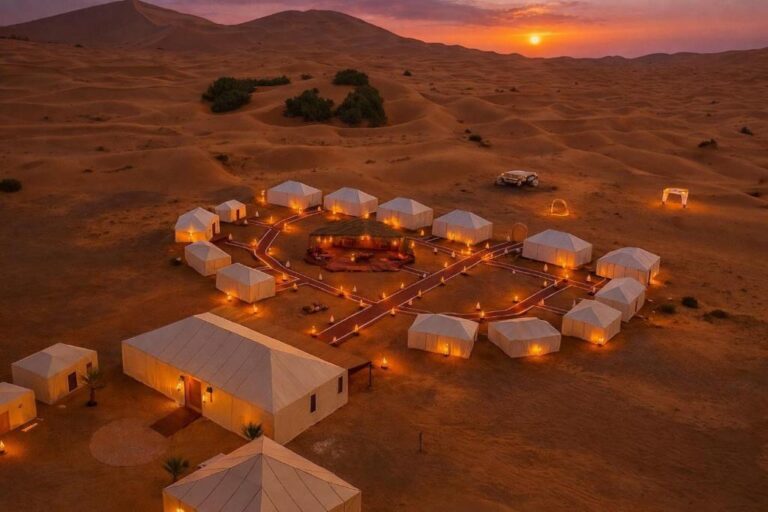
When travelers think about Morocco, the first image that often comes to mind is the Sahara: golden dunes, camels walking across the sand and a desert camp beneath a sky full of stars.
The Sahara is certainly one of Morocco’s extraordinary landscapes—but it is only one part of the story.
Morocco is a country of remarkable geographical contrasts. Within one journey, you can travel from snow-covered mountain peaks to green valleys, from cedar forests to waterfalls, from dramatic gorges to palm-filled oases and from rugged mountains to the Atlantic Ocean.
The country’s official tourism authority describes Morocco as a meeting point of sea, mountains, plains and desert, with the Rif, Atlas ranges, Atlantic coastline and different climatic zones creating a remarkably varied natural environment.
So if you are planning a Morocco trip and want to experience more than the desert, here are 12 incredible Morocco landscapes you shouldn’t miss.
1. The High Atlas Mountains
The High Atlas Mountains are one of the most spectacular landscapes in Morocco.
Stretching across the country, the mountains create a dramatic natural barrier between different regions of Morocco. They are home to some of the country’s highest peaks, deep valleys, traditional mountain villages and important hiking routes.
Mount Toubkal, at approximately 4,167 metres, is the highest peak in North Africa. The surrounding Toubkal National Park is a major destination for trekking and outdoor adventures. Morocco’s National Tourism Office highlights the High Atlas as a major mountain destination and promotes trekking around Toubkal and the Imlil area.
But you don’t have to climb Toubkal to appreciate the mountains.
A drive through the High Atlas can be an experience in itself. As you leave Marrakech, the landscape gradually changes from plains to increasingly dramatic mountain scenery.
You can discover:
Mountain valleys Morocco landscapes
Traditional villages Morocco landscapes
Terraced agriculture Morocco landscapes
Waterfalls Morocco landscapes
Hiking trails Morocco landscapes
High mountain passes Morocco landscapes
Panoramic viewpoints Morocco landscapes
For travelers who want an active Morocco experience, the High Atlas is an essential part of the journey.
2. The Aït Bouguemez Valley
Hidden in the High Atlas, the Aït Bouguemez Valley is one of Morocco’s most beautiful Morocco landscapes.
Often known as the “Happy Valley,” the valley is surrounded by impressive mountains and agricultural landscapes. The official tourism authority specifically highlights Aït Bouguemez as a hiking destination and notes the area’s high plateaus and surrounding peaks.
What makes the valley special is the combination of nature and traditional rural life.
Instead of simply driving through, consider spending a night or two in the area and exploring the valley on foot.
You can walk between villages, observe agricultural life, meet local communities and enjoy views of the surrounding mountains.
It is particularly attractive to travelers searching for Morocco off the beaten path.
3. Ouzoud Waterfalls
Morocco’s landscapes are not limited to mountains and desert.
The Ouzoud Waterfalls, in the Azilal region, are among the country’s best-known natural attractions.
The waterfalls drop through a dramatic landscape surrounded by vegetation and red-rock cliffs. The area is particularly impressive because it contrasts so strongly with the dry landscapes many visitors associate with Morocco.
The National Tourism Office highlights Ouzoud alongside Bin El Ouidane, Imi N’Ifri, the Ahansal gorges and Aït Bouguemez as some of the natural highlights of the Azilal region.
A day around Ouzoud can combine:
Waterfall viewpoints: Morocco landscapes
Walking trails: Morocco landscapes
Nature: Morocco landscapes
Rural landscapes: Morocco landscapes
Local restaurants: Morocco landscapes
Photography: Morocco landscapes
For travelers staying in Marrakech, Ouzoud can also be incorporated into a wider High Atlas itinerary.
4. Bin El Ouidane Lake
Another spectacular landscape in the Azilal region is Bin El Ouidane.
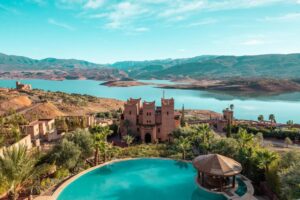
The deep blue waters of the lake are surrounded by mountains, creating a dramatic contrast between water, rock and vegetation.
The area offers a completely different visual experience from both Marrakech and the Sahara.
It is particularly suitable for travelers who enjoy peaceful natural environments and outdoor activities.
You can combine Bin El Ouidane with other attractions in the Azilal region, creating a nature-focused itinerary through the High Atlas.
The National Tourism Office specifically identifies the lake’s blue waters as one of the region’s notable natural attractions.
5. The Middle Atlas and Ifrane’s Cedar Forests
Travel farther north and the landscape changes again.
The Middle Atlas Mountains contain forests, lakes, waterfalls, plateaus and high-altitude landscapes.
Ifrane is one of the best places to experience this side of Morocco.
Located at approximately 1,650 metres above sea level, Ifrane is surrounded by cedar forests, lakes and mountain scenery. The National Tourism Office describes the region as a destination of lakes, waterfalls, forests and hiking trails.
The area can look remarkably different depending on the season.
In winter, snow can cover the mountains and forests. In warmer months, the surrounding landscapes become green and inviting for hiking and nature excursions.
This is a useful reminder that Morocco is not simply a hot, dry destination.
Its geography produces very different climates and landscapes throughout the country.
6. The Dades Valley and Dades Gorges
Moving toward southern Morocco, the landscape becomes increasingly rugged.
The Dades Valley is famous for its dramatic rock formations, winding roads, agricultural areas and palm-filled sections of the valley.
The nearby Dades Gorges create some of the most striking scenery in southern Morocco.
The landscape changes constantly as you travel through the region: mountains rise above green oasis areas, narrow roads wind through rock formations and traditional villages appear between the mountains.
The National Tourism Office includes the Dades Gorges among the diverse natural landscapes around Ouarzazate, Zagora and Tinghir.
This region is ideal for a Morocco road trip because the journey itself is part of the experience.
7. The Todra Gorge
Not far from Tinghir, the Todra Gorge offers another spectacular mountain landscape.
Here, enormous rock walls rise around a narrow valley, creating an impressive environment for walking, photography and exploration.
The landscape is especially striking because the surrounding region combines rugged mountains with green palm groves and oasis agriculture.
Tinghir and the Todra area are excellent stops on a southern Morocco itinerary connecting the High Atlas with the Sahara.
For hikers and photographers, the area provides opportunities to experience the landscape rather than simply viewing it from a vehicle.
8. The Skoura Palm Oasis
One of the most beautiful contrasts in southern Morocco can be found around Skoura.
The Skoura palm oasis is a large green landscape surrounded by the dry, ochre-colored environment of southern Morocco.
Within the oasis are palm trees, agricultural areas, traditional architecture and historic kasbahs.
The National Tourism Office specifically highlights the palm groves of Skoura as one of the natural attractions of the Ouarzazate-Zagora-Tinghir region.
This is one of the landscapes that demonstrates why Morocco is so visually diverse.
You can be surrounded by dry mountains and desert-like terrain, then suddenly enter a green oasis filled with palms and gardens.
A visit to Skoura is particularly rewarding when combined with an exploration of its historic kasbahs.
9. The Drâa Valley
The Drâa Valley stretches through southern Morocco and is one of the country’s great oasis landscapes.
Palm groves follow the valley, creating a long green corridor through an otherwise arid environment.
Along the route, travelers encounter villages, agricultural areas, kasbahs and dramatic mountain scenery.
The National Tourism Office highlights the palm groves of the Drâa as an important part of the natural landscapes around Ouarzazate and Zagora.
The Drâa Valley is also an important route toward the desert.
Traveling through it allows visitors to understand that the transition from mountain to desert is not immediate. There are valleys, oases and communities connecting these environments.
10. The Anti-Atlas Mountains
For travelers wanting to explore a less familiar side of Morocco, the Anti-Atlas Mountains deserve attention.
The Anti-Atlas is different from the High Atlas.
Its landscapes are generally more arid, rugged and geologically dramatic. The National Tourism Office describes the range as an arid mountain system situated close to the Saharan regions, with distinctive geological, natural and cultural characteristics.
Traveling through the Anti-Atlas can reveal:
Rocky mountain landscapes
Remote valleys
Traditional villages
Arid plateaus
Dramatic road scenery
Rural communities
It is particularly suitable for longer road trips and travelers who want to explore southern Morocco beyond the most popular tourist routes.
11. The Atlantic Coast and Essaouira
Morocco’s landscapes are not only inland.
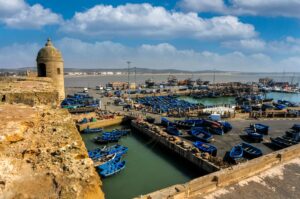
The country has an extensive Atlantic coastline, and Essaouira is one of the best destinations for experiencing the relationship between Morocco and the ocean.
The historic city sits beside the Atlantic, with its medina, harbor, beaches and fortified walls creating a distinctive coastal landscape.
The atmosphere is completely different from Marrakech or the Sahara.
Instead of desert heat and mountain roads, you have ocean breezes, waves, fishing boats and long coastal views.
Morocco’s Atlantic coast extends for more than 3,000 kilometres, according to the National Tourism Office, and includes numerous coastal destinations and Morocco landscapes.
Essaouira can easily be combined with Marrakech, making it an excellent choice for travelers who want to add a coastal dimension to their Morocco itinerary.
12. The Southern Desert Landscapes of Erg Chegaga
Finally, we return to the desert—but with an important distinction Morocco landscapes.
The Sahara is not a single landscape.
The Erg Chegaga area offers a vast desert environment of dunes, open plains and remote landscapes in southern Morocco.
The wider Ouarzazate-Zagora-Tinghir region includes Chegaga, Erg Lihoudi, Tinfou and other desert landscapes alongside oases, valleys, lakes and mineral landscapes.
A journey toward Erg Chegaga can be much more than a desert camp.
The route can include:
The Drâa Valley: Morocco landscapes
Remote desert tracks: Morocco landscapes
Oasis landscapes: Morocco landscapes
Nomadic areas: Morocco landscapes
Erg Iriki: Morocco landscapes
Large sand dunes: Morocco landscapes
Desert sunsets: Morocco landscapes
Stargazing
The result is an experience that connects several different landscapes rather than simply arriving at a dune field.
Why Morocco Is More Than the Sahara
One of the biggest misconceptions about Morocco is that it is primarily a desert destination.
In reality, Morocco contains an extraordinary range of environments.
The country’s geography includes the Rif Mountains, Middle Atlas, High Atlas and Anti-Atlas, as well as extensive Atlantic and Mediterranean coastlines, forests, lakes, valleys, wetlands, oases and desert regions.
This geographical diversity is one of the reasons Morocco works so well for different types of travelers.
You can plan a trip around:
Mountain adventures
Choose the High Atlas, Imlil, Toubkal or Aït Bouguemez for hiking and trekking.
Nature and waterfalls
Explore Azilal, Ouzoud and Bin El Ouidane.
Forests and lakes
Head toward Ifrane and the Middle Atlas.
Road trips
Travel through Ouarzazate, Skoura, Dades, Tinghir and the Drâa Valley.
Coastal escapes
Combine Marrakech with Essaouira or explore more of Morocco’s Atlantic coastline.
Desert adventures
Continue south toward Zagora, Erg Lihoudi, Erg Chegaga and the wider Sahara.
When Is the Best Time to Explore Morocco’s Landscapes?
The best time depends on which landscapes you want to experience.
Spring and autumn are generally particularly attractive for combining several regions because temperatures are often more comfortable for sightseeing and outdoor activities.
For the Sahara, Morocco’s tourism authority identifies spring and autumn as favorable periods for desert travel.
Mountain conditions vary with altitude and season. Winter can bring snow to the higher Atlas and Middle Atlas areas, while spring can offer beautiful green landscapes in many valleys.
The Atlantic coast can be attractive throughout much of the year, although coastal weather can differ considerably from inland conditions.
If you want to combine several regions in one trip, it is important to design the route around the season rather than simply choosing destinations independently.
How to Experience Morocco’s Landscapes Responsibly
Beautiful landscapes are also fragile landscapes.
When visiting mountains, valleys, deserts, forests and coastal areas, travelers should avoid leaving waste behind, respect local communities and follow guidance from local guides and protected areas.
Choosing locally operated accommodation, guides, transportation and experiences can also help distribute tourism benefits beyond the largest tourist centers.
A responsible approach makes the journey better for both travelers and the communities who live in these regions.
How to Build a Morocco Landscape Road Trip
One of the best ways to experience Morocco’s diversity is to combine several landscapes rather than staying in one region.
For example, a journey could begin in Marrakech, continue into the High Atlas, then travel through Aït Ben Haddou and Ouarzazate, spend time in Skoura and the Dades Valley, continue toward Tinghir, and then head into the Sahara.
Another route could connect Marrakech, Taroudant, Agadir and Essaouira, combining mountains, rural landscapes and the Atlantic coast.
For a longer adventure, you can combine the Atlas Mountains, southern Morocco, Erg Chegaga and the Atlantic coast.
The possibilities are extensive for Morocco landscapes.
Discover Morocco Beyond the Desert with AFC Morocco Travel
At AFC Morocco Travel DMC, we believe that Morocco should be experienced as a complete destination—not simply as a collection of famous attractions.
Our private and small-group journeys can combine mountains, valleys, oases, kasbahs, deserts, coastal towns and local experiences according to your interests and travel style.
Whether you want to trek in the High Atlas, explore the landscapes around Ouarzazate and Skoura, discover the Dades and Todra valleys, travel into the Sahara or finish your journey on the Atlantic coast, we can create a tailor-made itinerary around your priorities.
Final Thoughts
Morocco’s desert is extraordinary, but it is only one chapter of the country’s natural story.
From the snow-covered peaks of the Atlas to the waterfalls of Azilal, from the cedar forests of Ifrane to the gorges of Dades and Todra, from the green palm oases of Skoura and the Drâa Valley to the Atlantic coast of Essaouira, Morocco offers a remarkable collection of landscapes.
So when planning your next Morocco trip, don’t ask only:
“Where can I see the Sahara?”
Ask instead:
“How many different landscapes can I experience in one country?”
That is where the real diversity of Morocco begins.