
The Amazigh People: Guardians of Morocco’s Ancient Heritage and Culture
When travelers step onto the soil of Morocco, they are immediately enveloped by a sensory tapestry: the labyrinthine, spice-scented alleyways of the medinas, the sweeping, golden dunes of the Sahara, and the rugged, snow-capped peaks of the Atlas Mountains. While the world often views this region through the lens of Arab or French colonial influences, the true, foundational heartbeat of this land belongs to its indigenous people. They are the Amazigh the ancient, enduring soul of the Maghreb.
To truly understand the Amazigh culture of Morocco and North Africa, we must look beyond the surface. For thousands of years, long before modern borders were drawn, these resilient communities traversed, cultivated, and fiercely protected this expansive territory. Today, they remain the custodians of a profoundly rich heritage, balancing their ancient traditions with the rapid pace of the modern world.
In this comprehensive exploration, we will dive deep into the history, language, architecture, art, and modern revival of the Amazigh people, peeling back the layers of a culture that refuses to be forgotten.
The “Free People”: Correcting a Historical Misnomer
Before delving into their history, it is crucial to address the name by which they are most commonly, yet incorrectly, known: Berbers.
The term “Berber” is an exonym with a complex and largely colonial history. It traces its roots back to the ancient Greek word *barbaros* (meaning “babbler” or “non-Greek speaker,” eventually evolving into “barbarian”), which was later adopted by the Romans to describe anyone outside the Roman Empire. When Arab conquerors arrived in North Africa, they adapted the term into *Al-Barbar*, and European colonizers perpetuated it centuries later.
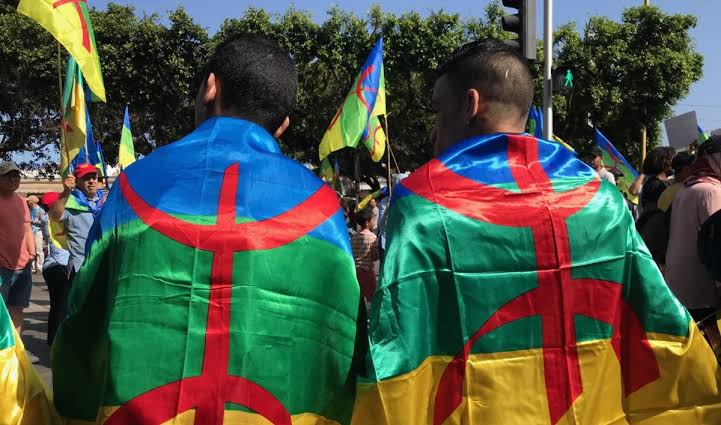
However, the indigenous people of North Africa refer to themselves as **Amazigh** (singular) or **Imazighen** (plural). In their native tongue, Tamazight, this word carries a beautiful and defiant meaning: “The Free People” or “The Noble Ones.” Using the term Amazigh is not just a matter of linguistic accuracy; it is an act of respect, acknowledging their agency, their identity, and their rightful place as the guardians of North Africa.
Deep Roots: A History Spanning Millennia
The story of the Amazigh culture of Morocco and North Africa is a saga of survival. Archaeological evidence suggests that the ancestors of the Imazighen have inhabited North Africa since the Neolithic period (around 10,000 BC), though the discovery of 300,000-year-old *Homo sapiens* remains at Jebel Irhoud in Morocco suggests an even deeper, ancient human continuity in the region.
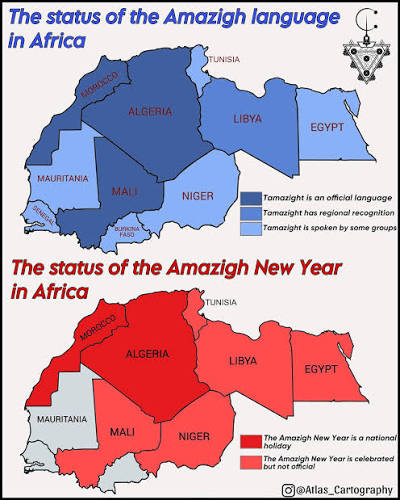
Historically, Amazigh territory, known as *Tamazgha*, was vast. It stretched from the Siwa Oasis in modern-day Egypt all the way to the Atlantic Ocean, and from the shores of the Mediterranean Sea down into the arid expanses of the Sahel (Mali, Niger, and Burkina Faso).
Kingdoms, Conquerors, and Resilience
Throughout antiquity, the Imazighen established powerful confederations and kingdoms. The Kingdom of Numidia, under the rule of legendary leaders like King Massinissa, played a pivotal role in the geopolitical struggles between Rome and Carthage. There was also the Kingdom of Mauretania, spanning parts of modern Morocco and Algeria.
Because of their strategic location, the Imazighen constantly interacted with external powers. They traded with the Phoenicians and Carthaginians, fiercely resisted Roman expansion, and eventually faced the Arab invasions in the 7th century. It was during this era that figures like **Queen Dihya** (often referred to as Kahina) emerged, leading a valiant, fiercely organized military resistance against the Umayyad expansion.
Eventually, the majority of the Amazigh people embraced Islam, yet they did so on their own terms, weaving their ancient seasonal and agricultural rites into their new religious framework. In the 11th and 12th centuries, it was Amazigh dynasties—the **Almoravids** and the **Almohads**—who forged massive empires, ruling over North Africa and Al-Andalus (Islamic Spain), leaving behind a legacy of stunning architecture and intellectual advancement.
Despite wave after wave of foreign influence—including the much later French and Spanish protectorates—the Imazighen were never entirely subjugated. Their harsh, mountainous environments provided natural fortresses, allowing their culture to endure intact.

Tamazight: The Voice of the Free People
At the core of the Amazigh culture of Morocco and North Africa is their language: **Tamazight**. Belonging to the Afro-Asiatic language family, it is one of the oldest living languages in the world.
For centuries, Tamazight survived primarily through oral traditions. Mothers passed down wisdom through lullabies; tribal elders recited epics around fires; and poets preserved history through spoken verse. However, Tamazight also boasts its own ancient script, known as Tifinagh. Originating over 2,500 years ago, Tifinagh is characterized by its striking, geometric symbols—circles, lines, and crosses—that look remarkably different from both Latin and Arabic scripts.
The Dialects of Morocco
In Morocco alone, there are three primary regional variations of Tamazight, closely tied to the geography of the land:
- Tarifit: Spoken in the rugged Rif Mountains in the north.
- Tamazight (Central Atlas Tamazight):** Spoken across the Middle Atlas Mountains.
- Tashelhit: The most widely spoken dialect, echoing through the High Atlas, the Anti-Atlas, and the fertile Souss Valley in the south.
A Constitutional Victory
For decades post-independence, Tamazight was marginalized in favor of Arabic under strict Arabization policies. It was banned in schools, courts, and administrative settings. However, following years of relentless cultural activism—often referred to as the Amazigh Spring—and the political shifts of 2011, Morocco overwhelmingly voted for a new constitution. **Tamazight was officially recognized as a state language alongside Arabic.** Today, you will see Tifinagh script proudly displayed on government buildings, highway signs, and schools across the country.
The Social Fabric: Akal, Afgan, and Awal
To understand the social structure of the Amazigh people, one must understand their defining trinity: Akal (Land), Afgan (Blood/People), and Awal (Language).
The Imazighen possess a profoundly spiritual and practical connection to the earth. The land is not merely a resource; it is a vital organ of the community that provides sustenance and protection. Because the mountain and desert terrains can be unforgiving, Amazigh society was built upon immense communal solidarity.
- The Taqbilt (Tribe): Society was traditionally organized into confederations, tribes, and sub-tribes.
- The Ajmooa/Agraw: At the village level, affairs were managed by the *Jemaa* (an assembly or council of elders). This was an early form of localized democracy, where the heads of families would gather to mediate disputes, allocate water resources for irrigation, and plan harvests.
- Tiouizi: This is the ancient practice of communal volunteer work. Whether it is building a house, harvesting olives, or preparing for a massive village wedding, the community acts as a single organism, ensuring no individual is left to struggle alone.
Architecture: Earth, Stone, and Survival
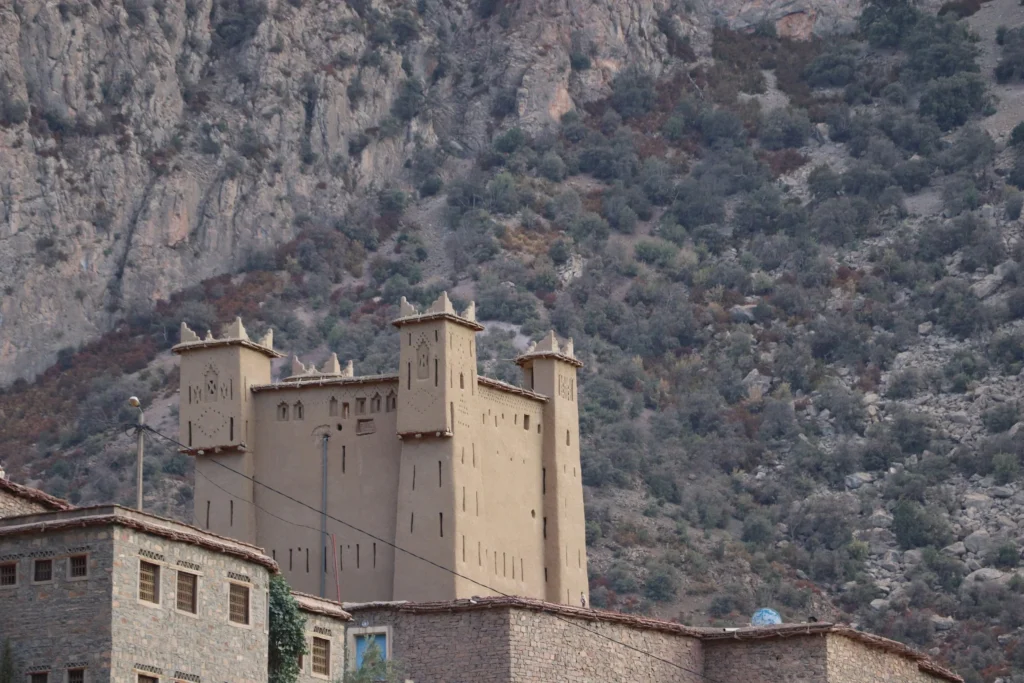
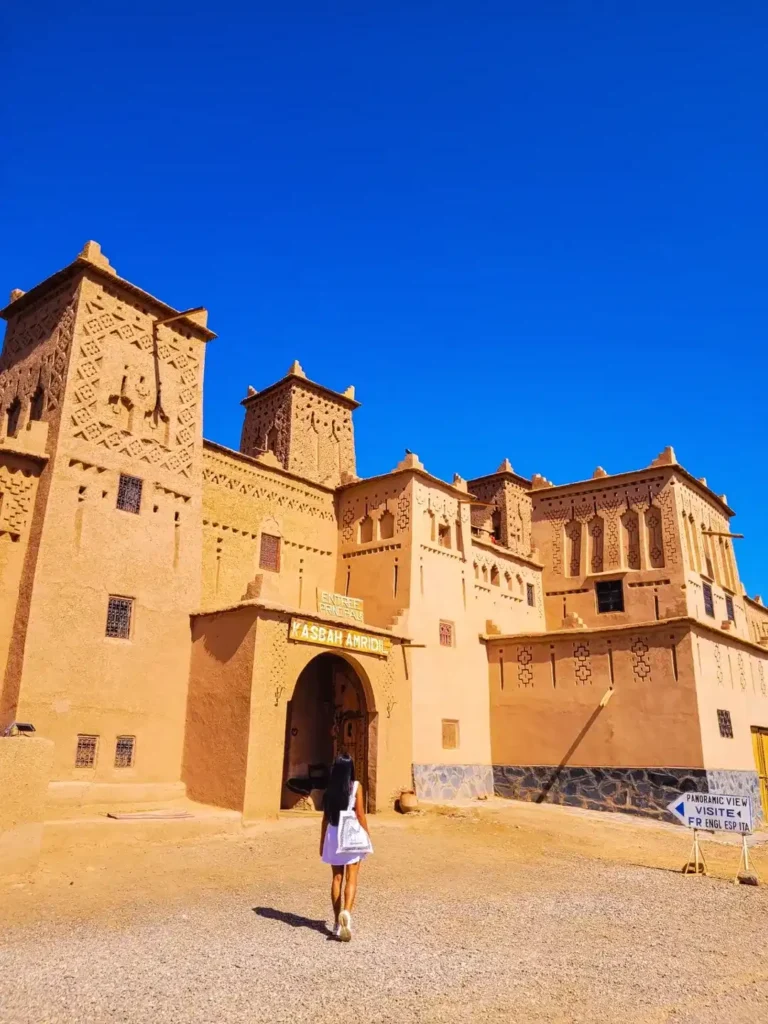
The Amazigh culture of Morocco and North Africa is deeply inscribed into the landscape through its breathtaking, highly functional architecture. Bypassing modern concrete, traditional builders utilized the materials beneath their feet: rammed earth (*pisé*), sun-dried mud bricks (adobe), stone, and palm wood.
Kasbahs and Ksours
A Kasbah (Tighrmte) is typically a fortified, multi-story residence meant for a local leader or wealthy family, while a Ksar/Ighrem (plural: Ksours/Ighrman) is an entire fortified village. These structures, found heavily in the pre-Saharan valleys of southern Morocco (like the famous Ksar of Aït Benhaddou), are architectural marvels. The thick mud walls provide incredible thermal regulation—keeping the interiors remarkably cool during blistering summer days and trapping heat during freezing desert nights.
The Agadir (Collective Granary)
Perhaps the most ingenious of Amazigh architectural inventions is the *Agadir* or *Ighrem*. Built on high, defensible rocky outcrops, these collective granaries functioned as the ultimate community bank. Families had their own individual storage rooms within the fortress, accessed by ladders or precarious stone steps. Here, they stored their most precious assets: barley, wheat, dates, argan oil, and even jewelry and land deeds. During times of tribal conflict or famine, the entire village would retreat inside the Agadir, which was guarded fiercely by a designated custodian (the *Amin*).
Art and Craftsmanship: Weaving Magic, Metals, and Meaning
In Amazigh culture, art is rarely created purely for aesthetic pleasure; it is deeply utilitarian and heavily steeped in spiritual symbolism. Central to this is the concept of **’Baraka’**—a divine blessing, positive energy, or protective spiritual power. Artisans infuse their work with Baraka, ensuring that the objects protect their owners from misfortune and the “evil eye.”
The Loom as a Canvas: Berber Carpets
Carpet weaving is a sacred, female-dominated art form. An Amazigh woman working at her loom is not just making a rug; she is weaving her life story, her fears, her hopes for fertility, and the history of her ancestors. The designs are not planned on paper; they flow intuitively from the weaver’s mind.
Beni Ourain: Middle Atlas | Thick pile, undyed white or cream sheep’s wool, adorned with dark brown or black minimalist geometric lines. |
Azilal: High Atlas | Shorter pile, incredibly vibrant colors made from natural dyes, featuring abstract and deeply personal storytelling patterns. |
Boucherouite: Various Regions | Upcycled masterpieces made from torn scraps of old clothing, cotton, and nylon. Explosively colorful and texturally rich. |
Taznaght: Anti-Atlas | Intricate flat-weaves or knotted rugs, known for their precise geometric shapes dyed with natural saffron, madder, and henna. |
The Symbology of Weaving:
When you look closely at these textiles, you will notice recurring geometric shapes:
- The Barley (Rectangles/Chevrons): Symbolizes a bountiful harvest and fertility.
- The Eye (Concentric Diamonds): A fierce ward against malevolent spirits and the evil eye.
- The Spider: Represents patience, harmony, and the working life of the weaver.

Silver and Fire: Amazigh Jewelry
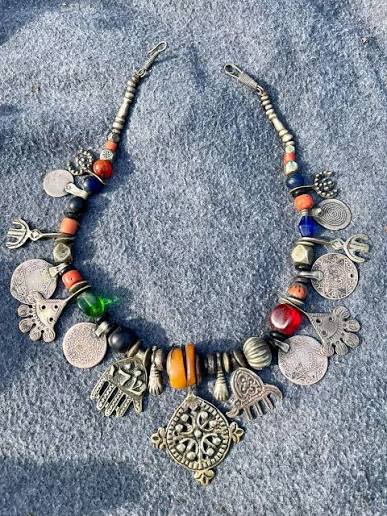
While women weave, men traditionally worked the forges. Amazigh jewelry is striking, favoring heavy silver over gold, which was historically viewed as a metal of greed. These pieces, often embellished with amber, coral, and colorful enamel, served as a woman’s portable bank account and dowry.
The most iconic piece is the Tazerzit (Fibula) a large, triangular silver brooch used to fasten garments. The inverted triangle represents the woman, fertility, and the tent, serving as a powerful emblem of the Amazigh identity.
The Canvas of the Body: Traditional Tattoos (Tabrat)
One of the most visually captivating, yet rapidly fading, aspects of the Amazigh culture of Morocco and North Africa is the tradition of female facial and body tattoos, known as *Tabrat* (meaning “letter” or “message”).
For millennia, Amazigh women bore intricate geometric patterns on their chins, foreheads, cheeks, wrists, and ankles. These tattoos were applied using a needle and a mixture of soot, antimony, and sometimes herbs.
“The body of an Amazigh woman was an archive—a living text that carried the unwritten history of her people the Amazigh Poeple.”
The purpose of these tattoos was multifaceted:
- Tribal Identity: Certain patterns instantly identified a woman’s lineage or tribe.
- Rites of Passage: They marked a girl’s transition into puberty, marriage, and motherhood.
- Healing: Tattoos were often placed over joints or areas of the body that suffered from chronic pain, believed to carry medicinal and protective Baraka.
With the rise of more orthodox interpretations of Islam in the mid-20th century, which forbade the alteration of God’s creation, the practice was heavily discouraged. Today, the elderly women in remote mountain villages are the last living canvases of this ancient visual language. Their fading blue-green ink is a poignant reminder of a semiotic tradition that is slowly disappearing.

Rhythms of the Atlas: Music, Dance, and Festivals
Because Tamazight was an oral language for much of its history, music and poetry became the primary vessels for preserving laws, history, and social commentary.
Traditional Amazigh music is a communal affair, characterized by hypnotic, rhythmic drumming and call-and-response singing. Instruments are crafted from nature: the “Aynza” (a circular frame drum with a snare cord underneath for a buzzing resonance), the Loutar (a plucked lute covered in animal skin), and the Tabja(a reed flute).
Ahidous, Ahouach and Izlan
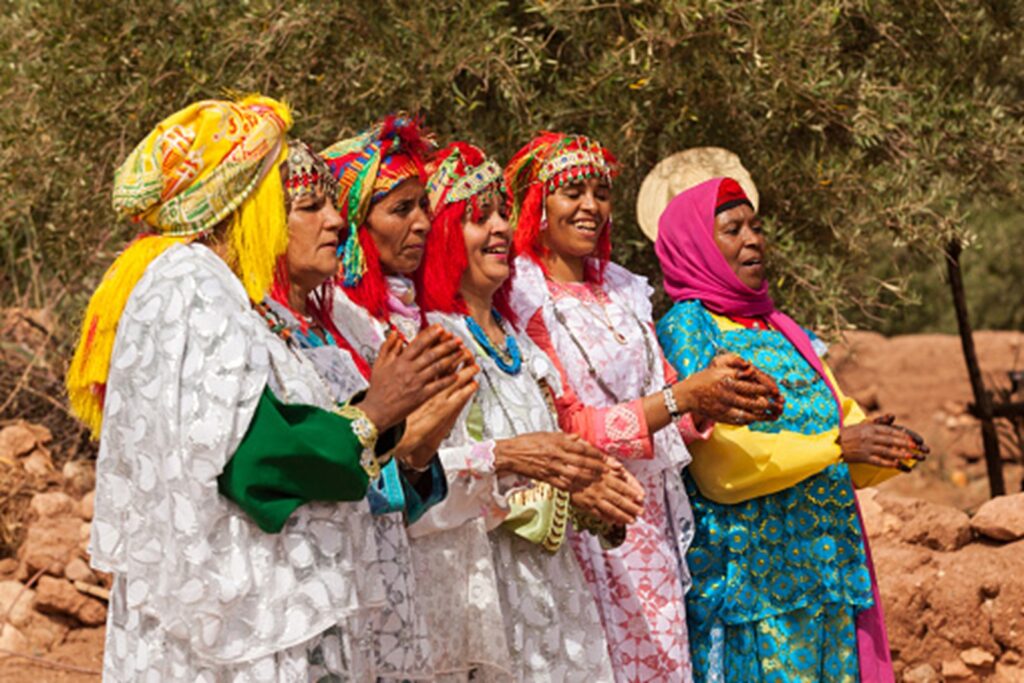
The two most famous forms of musical expression in Morocco are the *Ahidous* (from the Anti-Atlas and Middle Atlas) and the *Ahouach* (from the High Atlas and southern regions). These are not performances meant for an audience; they are participatory circle dances. Men and women stand shoulder-to-shoulder in massive rings or opposing lines, swaying, chanting, and clapping in synchronized rhythm. It is a profound display of unity and social cohesion.
The Imilchil Marriage Festival
Every September, high in the Atlas Mountains, the *Moussem of Sidi Hmad Mghani*, famously known as the Imilchil Marriage Festival, takes place. According to legend, it honors two star-crossed lovers from warring tribes, Isli and Tislit, whose unsanctioned love caused them to cry themselves to death, forming the two lakes that bear their names today.
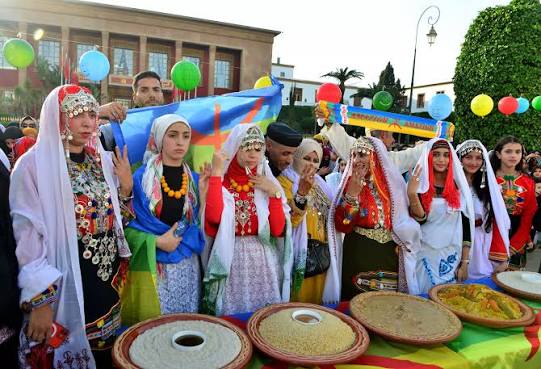
To prevent such tragedies, the tribes agreed to gather once a year to allow young men and women to choose their own spouses. Today, up to 30,000 people from various tribes converge in tents to trade goods, celebrate the harvest, sing, dance, and allow young people to court. It is a stunning, vibrant explosion of authentic Amazigh culture.
Culinary Heritage: The Taste of the Earth
Moroccan cuisine is world-renowned, but its foundational pillars were entirely established by the Amazigh. Their food is intrinsically tied to agricultural cycles and the harsh environments they inhabit.
The Tagine: The word “tagine” refers not just to the stew, but to the conical clay pot it is cooked in. Invented by the Imazighen, the cone shape allows condensation to return to the base, slowly braising tough cuts of meat and root vegetables with minimal water—a vital innovation in an arid climate.
Couscous: The staple carbohydrate of North Africa. Traditionally rolled by hand from semolina wheat, steaming couscous is a labor of love, usually reserved for the communal Friday meal after prayers.
Argan Oil: Endemic only to the Souss Valley of southwestern Morocco, the argan tree is the “Tree of Life” for the local Imazighen. For centuries, Amazigh women have passed down the incredibly labor-intensive technique of cracking argan nuts between stones to extract the kernels, which are then cold-pressed into “liquid gold.” Today, women’s cooperatives manage much of the production, providing them with independent income and elevating their social status.
Atay (Mint Tea): No discussion of Amazigh culture is complete without tea. Preparing and pouring sweet mint tea from a dramatic height to create a frothy crown is the ultimate symbol of hospitality. It is said that in the mountains, you will be offered tea before you are even asked your name.
The Modern Revival: Balancing Heritage and Globalization
The Amazigh culture of Morocco and North Africa is not a relic of the past; it is a living, breathing, and evolving entity. However, the modern era presents a unique set of challenges and opportunities.
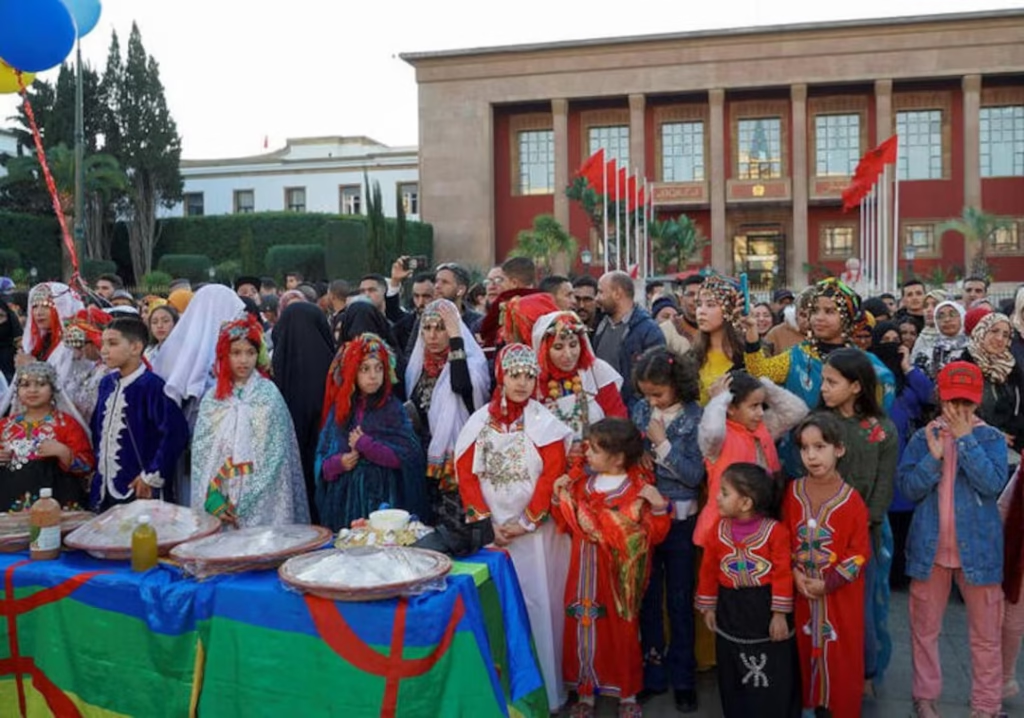
Following decades of marginalization, the establishment of the **Royal Institute of the Amazigh Culture (IRCAM)** in 2001 marked a turning point in Morocco. Today, there is a fierce and joyful reclamation of identity among the youth.
Contemporary Expressions:
Music: A new wave of musicians is blending ancient Tamazight poetry and traditional rhythms with rock, blues, and reggae. Bands like *Tinariwen* (from the Tuareg branches in the Sahara) and Moroccan groups like *Meteor Airlines* (who dub their genre “Desert Rock”) are bringing Amazigh sounds to international stages.
Tourism: The surge in tourism offers a double-edged sword. While the demand for guided treks, stays in Kasbahs, and the purchase of Berber rugs provides vital economic support to rural villages, there is a constant risk of commodification. Authentic cultural preservation requires that the Imazighen remain the primary beneficiaries and authors of their own narrative, rather than being reduced to exotic caricatures.
The youth are highly active on social media, using the Tifinagh script in their bios, proudly flying the colorful Amazigh flag (which features blue for the sea, green for the mountains, yellow for the Sahara, and the red *Yaz* symbol ⵣ representing the “Free Man”), and advocating for indigenous rights across North Africa the Amazigh people.
The Amazigh People Guardians of the Future
The Amazigh culture of Morocco and North Africa is a testament to the indestructible nature of human identity. Through millennia of shifting empires, changing climates, and political upheaval, the Imazighen have remained deeply rooted in the soil of the Maghreb.
They are the architects who sculpted fortresses from the earth, the weavers who spun their histories into wool, and the poets who kept their language alive in the thin, cold air of the Atlas Mountains. They are not merely inhabitants of North Africa; they are its memory, its soul, and its future. As Morocco continues to modernize, the vibrant, undeniable spirit of the *Free People* ensures that the ancient heart of the land will never stop beating.